From Burnout to Integration: The Neuro-Theology of Healing Leadership
As I stood in front of the ideas and comments written on the poster-sized sticky notes on the wall, thinking carefully about the conversations of the last four hours, a reality began to dawn on me.
I turned to check with the six people seated around the table who were watching me, thinking their own thoughts, and who were also coming to the same realization.
“Discipleship is a good goal,” one of the pastors said. “But I just don’t have time for a discipleship program. I’m feeling overwhelmed by too many other things.”
My mind began racing at this comment. Discipleship isn’t a program; it’s a relationship, a way of life. But as the facilitator of this early doctoral-project focus group, I kept my thoughts to myself.
“Yes, I agree,” said another pastor. A lay leader chimed in, “I don’t have time for a discipleship program either. I think you’re really looking at overwhelm and burnout for your project.”
And so began my exploration into how ministry leaders experience—and heal—stress, overwhelm, and burnout, and how they can flourish instead. As I prayed about this over the next few days, I was sure God was encouraging me to follow this path for the project. I could always come back to what I believe “discipleship” really means. There could be more on that another time.
Integration: When Connection Heals
The opposite of overwhelm and burnout is well-being—physical, emotional, psychological, relational, and spiritual. Daniel Siegel writes in Mindsight: “Well-being emerges when we create connections in our lives—when we learn to use mindsight to help the brain achieve and maintain integration, a process by which separate elements are linked together into a working whole. … Integration enables us to be flexible and free.”¹ He also explains that mindsight “allows us to examine closely, in detail and in depth, the processes by which we think, feel, and behave.”²
Integration happens between people, when two minds connect, with my mind transforming yours and yours, mine. But integration also happens within one body—top to bottom, left to right—when emotions, sensations, and thoughts are linked instead of isolated. Integration means that no one thing or one person stands alone; we are interconnected externally and internally, in all the ways God created us.
Nicholas and Sheila Wise Rowe’s Healing Leadership Trauma ties directly into this exploration. They explain that burnout among leaders is not merely overwork; it is dis-integration: body, mind, and spirit no longer communicating. Their book reframes leadership restoration as a journey from fragmentation to integration through grace.³ The Rowes emphasize that the roots of disintegration and disconnection typically arise from relational traumas across a lifetime. “Leaders without a secure internal sense of self try to create one from outside.”⁴ This insight names what I have witnessed in ministry settings: people compensating for internal insecurity through performance and control.
Where Healing Begins
Self-awareness is where this healing begins. The Rowes invite leaders to notice internal triggers—the moments when old wounds hijack current reactions.”Sometimes we are prone to becoming triggered. When something happens that disturbs or dysregulates us, it’s because there is something we need to know about that experience.”⁵ Awareness becomes the first act of healing because it interrupts the automatic loop between fear and defense.
In my doctoral project, Wellspring for Renewal and Transformation in Ministry, the journey of healing and integration unfolds in a similar way. Each month, participating leaders are invited to attend to body, mind, and spirit, to rest in belovedness, notice patterns of reactivity, and restore connection through grace. Our process begins with what I call the ARK of Integrity:
- Aware – Notice what is happening in your body and emotions.
- Reflect – Name what is true, bringing it into compassionate light. (Neuroscientifically, this process—affect labeling—helps you become more emotionally regulated because it reduces the intensity of a feeling by shifting activity from the brain’s emotional center (amygdala) to the reasoning center (prefrontal cortex).
- Know – By slowing down, you get to choose words and actions that are in alignment with (integrated with) your values and vocation.
This rhythm mirrors the Rowes’ stages of naming, lamenting, re-attaching, and re-authoring. Awareness and reflection prepare the ground for knowing—acting from integrity, thoughtfully, rather than reacting, thoughtlessly.
Neuroscience confirms what theology proclaims. Siegel’s concept of mindsight describes how awareness links differentiated parts of the brain, enabling flexibility and freedom. Todd Hall calls this relational spirituality: “Our implicit [gut-level] relational knowledge reveals how we construct the meaning of our relational worlds. This is the starting point for any deep level of transformation.”⁶ Healing happens when leaders experience attunement—with God, self, and others—so that neural integration becomes spiritual coherence. Curt Thompson writes that “To be fully loved—and to fully love—requires that we are fully known,” which captures both the relational and incarnational nature of grace.⁷
When integration takes root, leaders move from self-protection to self-presence. They regain what Jim Wilder calls relational mode—the ability to stay connected, curious, and compassionate even under pressure.⁸ Instead of reacting from anxiety, they respond from coherence. This is what Edwin Friedman described as a non-anxious presence, yet the Rowes help us see that presence is impossible without healing the nervous system that carries it.
In the Wellspring model, integration is not an abstract ideal but a lived practice: quieting the body, listening for emotion, inviting God’s perspective, and re-engaging relationships with grace. Over time, these small moments of awareness and reconnection rebuild trust in both the body and in God.
Burnout, then, is not simply exhaustion; it is disconnection. Integration is its healing opposite: the restoration of flow between body and spirit, memory and hope, self and community. Grace becomes the glue of coherence, linking all the fragmented parts until leaders can once again live and lead from wholeness.
¹ Daniel J. Siegel, Mindsight: The New Science of Personal Transformation (New York: Bantam, 2010), xiii.
² Ibid., x.
³ Nicholas Rowe and Sheila Wise Rowe, Healing Leadership Trauma (Downers Grove, IL: IVP, 2024), 133.
⁴ Ibid., 39.
⁵ Ibid., 121.
⁶ Todd W. Hall, The Connected Life: The Art and Science of Relational Spirituality (Downers Grove, IL: IVP, 2022), 53.
⁷ Curt Thompson, The Soul of Shame: Retelling the Stories We Believe about Ourselves (Downers Grove, IL: IVP, 2015), 126.
⁸ Jim Wilder and Ray Woolridge, Escaping Enemy Mode: How Our Brains Were Hijacked and What We Can Do about It (Carol Stream, IL: Tyndale, 2023), 236.
About the Author

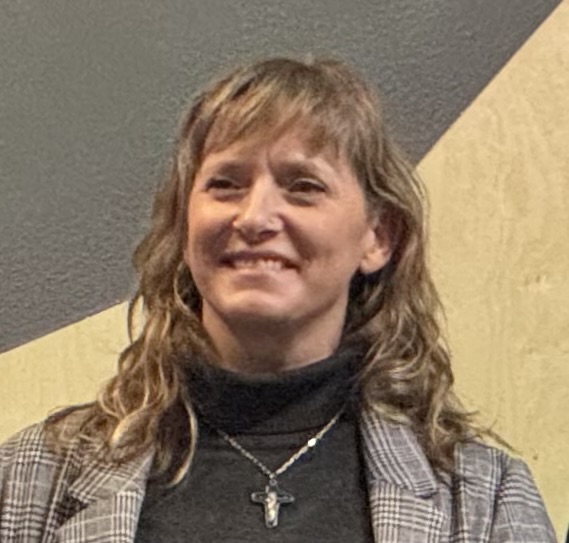
Debbie Owen
Deborah C. Owen is an experienced spiritual director, Neuro-based Enneagram executive and life coach, disciple maker, professional writer, senior librarian, and long-time church Music Director and lay leader. She has earned the award of National Board Certification for teaching excellence, and a podcasting award, and is pursuing a Doctor of Leadership degree through Portland Seminary at George Fox University. She lives in the backwoods of Maine with her husband and flat-coated retriever. She spends as much time as she can with their 3 grown children, daughter-in-law, and 2 small grandchildren. Find her online at InsideOutMinistries.info.9 responses to “From Burnout to Integration: The Neuro-Theology of Healing Leadership”
Leave a Reply
You must be logged in to post a comment.












































































Debbie, I appreciate your perspective on burnout. It is particularly interesting to view burnout as a disconnection — both internal and external. I see this play out often overseas. What advice do you have for leaders who are helping those in burnout find healing and wholeness without burning themselves out?
“I appreciate your perspective on burnout. It is particularly interesting to view burnout as a disconnection — both internal and external. I see this play out often overseas. What advice do you have for leaders who are helping those in burnout find healing and wholeness without burning themselves out?”
Kari, I think you’re asking, “If I’m a leader who is helping other leaders not get burned out, how do I prevent burning out myself?”
There are a lot of strategies one could apply. They come under multiple categories: physical energy, mental, emotional, social, and spiritual energies. Each of those has specific strategies and tools.
Physical energy: harmonize nutrition, sleep, energy and movement.
Mental: transform outdated patterns of thought and expand your perspective.
Emotional: Emotions are data. Learn to differentiate emotions from thoughts and be able to name your feelings.
Social: Recognize that different people have different personalities, attachments, and identities. This helps us navigate conflict and promote better social interactions.
Spiritual: spiritual disciplines that help draw us closer to God; honoring our personal values.
That’s just touching the surface. There’s a lot to know! But I know you’re a great coach and know all that already. 😉
Hi Debbie, I appreciate the connection between neuroscience, theology, and leadership. How might churches begin to integrate nervous system healing into their discipleship models?
“I appreciate the connection between neuroscience, theology, and leadership. How might churches begin to integrate nervous system healing into their discipleship models?”
Graham, I love this question! It’s right up my alley. 🙂
Churches can integrate nervous system healing by reframing discipleship as the embodied practice of integration, not just a program. This begins by teaching the ARK of Integrity (Aware, Reflect, Know) to normalize emotional and bodily presence, shifting the focus from performance-based identity to relational security in God. Specifically, they can integrate Sabbath and affect labeling (naming feelings) into small groups to foster the non-anxious presence necessary for true spiritual coherence.
Thanks Debbie. Great post. How does rest and other physical activities like exercise and diet relate to the neuro transformation you are describing?
“How does rest and other physical activities like exercise and diet relate to the neuro transformation you are describing?”
There’s a LOT to say about this. Succinctly:
Rest, exercise, and diet are essential biological pathways to the integration described. Intentional rest (Sabbath) activates the brain’s rest/digest component, signaling safety and improving the relational mode. Exercise promotes the growth of new neurons and strengthens existing neural connections that are necessary for flexibility and resilience. Finally, a healthy diet reduces inflammation throughout the body, optimizing the chemical environment for sustained emotional regulation and coherence. These practices are the embodied response that retrains the nervous system out of trauma-induced disconnection.
Thank you for your post, Debbie. My question is somewhat general:
How does intergenerational learning and mentoring appear in the book’s vision for healing leadership?
“My question is somewhat general:
How does intergenerational learning and mentoring appear in the book’s vision for healing leadership?”
Haha!! That’s not what I wrote about Shela! 😉 But I’ll try to answer anyway:
The book frames healing as a move from fragmentation to integration, where mentoring acts as a secure, new relational attachment, disrupting old trauma patterns. This intergenerational connection provides a safe context for the wounded leader to practice vulnerability and receive the affirming blessing that may have been withheld when they were growing up.
Hi Debbie, I appreciate you sharing your project. I am wondering if you have a specific target audience for it? Groups? Individuals? Either?