When Leadership Turns Inward: A Final Mapping of the Soul
Dedication
To my cohort: thank you for the thoughtful engagement and intellectual challenge that have helped form both the contours of my thinking and the shape of my leadership, sharpening the thresholds I continue to cross.
How Friedman and Walker Intersect With My Inner Life
As I reach the final blog of my doctoral program, I am increasingly aware that leadership cannot be reduced to strategies, competencies, or organizational techniques. Across these two-plus years of study, the inner life of the leader has emerged not as a sidebar to leadership theory but as its central terrain. Friedman and Walker offer not simply frameworks to master but lenses that reshape how I understand presence, identity, and influence. Their insights continue to illuminate the places within me where reactions, uncertainties, and learned habits still shape how I lead.
Friedman’s claim that “the focus of mature leadership is not technique but the leader’s own presence”[1] clarifies the interior nature of leadership. Walker’s early reflections on power deepen this point theologically, noting that “Jesus…had used weakness” rather than the forms of power leaders often prefer.[2] Their work has pushed me to identify the recurring patterns in my leadership—particularly defensiveness and self-doubt.
Leadership Under Pressure: Mauritania as a Mirror
Life in Mauritania reveals these internal dynamics with clarity. The relational and cultural dynamics here require attentiveness and grounded presence, while commentary from the United States—often shaped by distance rather than experience—can introduce a second layer of scrutiny to my decisions. As Chad Warren notes, “anxiety spreads through emotional process, not doctrinal disagreement,”[3] and I recognize that truth in how easily distant critique can unsettle my posture.
When criticism arrives, I explain more than necessary. I question my instincts. I carry emotional weight that does not belong to me. These responses reveal a drift away from grounded presence and toward unnecessary self-doubt. Kari Kinard captured this dynamic when she wrote, “Although I have grown significantly, I still find myself pulled back into defensiveness when pressures mount.”[4] Recognizing these patterns has become part of my own inner work.
Reframing Through Friedman and Walker
Friedman’s understanding of self-differentiation reorients these moments. His statement that “a leader must remain connected while maintaining a sense of self”[5] clarifies why absorbing others’ emotions is counterproductive. Presence does not require absorbing the emotions of others; it requires staying connected while maintaining focus about where I end and others begin.
Walker extends this reframing by describing undefended leaders as those “whose life and philosophy have involved deliberate acts of weakness and courageous self-sacrifice.”[6] For him, leadership depends not on mastery but on internal freedom—the willingness to relinquish the strategies we use to protect ourselves. Together, Friedman and Walker offer a systems-oriented and psychological framework that helps me recognize what pressures belong to me and what does not—and to respond from a steadier, more intentional center.
Thresholds of the Inner Life
These ideas have become thresholds—inner crossings that recalibrate how I understand leadership. Walker’s observation that “leadership is about who you are, not what you know or what skills you have”[7] emphasizes the centrality of the leader’s inner life. Noel Liemam’s similar insight—“My way of being is not background; it is the core of leadership”[8]—captures the same truth.
Such recognition marks a shift in how I interpret the demands of leadership: the anxieties around me often require a corresponding shift in how I regulate myself and maintain definition within the system.
An Evolving Leadership Identity
Throughout this program, I have watched my leadership identity evolve. Intellectually, I now see the convergence of systems theory, psychology, and theology around the leader’s inner life. Emotionally, I am more aware of the early signs of anxiety before it dictates my posture. Spiritually, I am rediscovering that identity—not performance—forms the foundation of resilience.
Mauritania continues to test and refine these insights. The variability of daily life brings into focus the ongoing need for internal steadiness. Here, staying grounded helps me navigate unpredictability with greater intention and less emotional reactivity.
Emerging Thresholds Ahead
New thresholds are emerging, particularly in discerning which pressures are mine to carry and which belong to the systems around me. Walker notes that leaders are often shaped through struggle: “the combatants do battle with themselves…wrestling with their inner selves.”[9] That struggle remains present in cross-cultural leadership, especially when navigating conflicting expectations between cultures.
As Daren Jaime observes, “A defended leader reacts rather than responds.”[10] My ongoing work involves responding from discernment rather than participating in the anxieties that surround me.
Practices That Sustain an Undefended Life
The practices that sustain this work are simple but essential. Unhurried mornings with Scripture and reflective writing create the space I need to enter the day aligned rather than scattered. Counseling remains a place where I examine patterns that impact far more than my cross-cultural life. I have also learned not to respond immediately to every request or critique; delayed response creates room for better discernment. These rhythms are small but anchoring. They help cultivate what Walker calls “freedom to perform…because you are secure that your identity…does not depend on the quality of your performance.”[11]
Together, Friedman and Walker provide complementary vantage points that help me discern when I am being pulled into reactivity and when I can remain defined, present, and connected. Their combined insight helps me interpret pressure not as something to absorb but as information about the system—an invitation to clarify my stance rather than collapse into defensiveness.
A Vocation Shaped from Within
Taken together, these developments continue to shape how I understand my calling in Mauritania. Leadership here is fundamentally relational; it unfolds in the ongoing work of building trust, navigating ambiguity, and remaining present amid competing expectations. Walker’s claim that leadership is a matter of who we are aligns closely with Friedman’s emphasis on presence and self-regulation. Friedman’s reminder that “self-regulation and the management of anxiety” are central to good leadership[12] remains particularly relevant in this context.
Inner formation is not an optional dimension of leadership—it is its core. The thresholds I cross internally inevitably shape how I lead and the tone I establish within relationships. As this program concludes, it feels less like an ending and more like stepping across a new threshold, carrying forward the shared wisdom, tensions, and insights that will continue to shape the leader I am becoming.
In the end, the most meaningful learning has been discovering the kind of presence I bring into the spaces I inhabit—and the kind of presence I am still becoming.
[1] Edwin H. Friedman, A Failure of Nerve: Leadership in the Age of the Quick Fix (New York: Seabury Books, 2007), 37, Kindle.
[2] Simon P. Walker, Leading Out of Who You Are: The Undefended Leader (Carlisle: Piquant Editions, 2007), 10, Kindle.
[3] Chad Warren, “Consilience Mapping: Revisiting Friedman and Walker,” DLGP Blog, November 19, 2025, https://blogs.georgefox.edu/dlgp/consilience-mapping-revisiting-friedman-and-walker-4/.
[4] Kari Kinard, “(Mostly) Non-Anxious & Undefended in Africa,” DLGP Blog, November 20, 2025, https://blogs.georgefox.edu/dlgp/mostly-non-anxious-undefended-in-africa/.
[5] Friedman, A Failure of Nerve, 35, Kindle.
[6] Walker, Leading Out of Who You Are, 12, Kindle.
[7] Walker, Leading Out of Who You Are, 17, Kindle.
[8] Noel Liemam, “Consilience Mapping: Revisiting Friedman and Walker,” DLGP Blog, November 20, 2025, https://blogs.georgefox.edu/dlgp/consilience-mapping-revisiting-friedman-and-walker-5/.
[9] Walker, Leading Out of Who You Are, 23-24, Kindle.
[10] Daren Jaime, “Consilience, Sandpaper, Friedman and Walker,” DLGP Blog, November 20, 2025, https://blogs.georgefox.edu/dlgp/consilience-sandpaper-friedman-and-walker/.
[11] Walker, Leading Out of Who You Are, 130, Kindle.
[12] Friedman, A Failure of Nerve, 51, Kindle.
About the Author

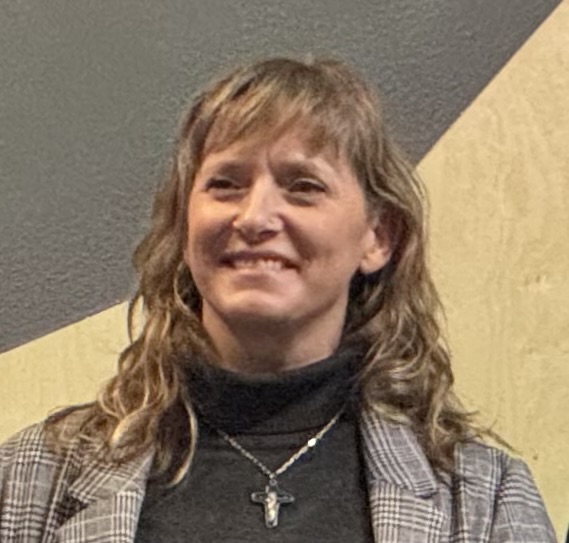
Elysse Burns
16 responses to “When Leadership Turns Inward: A Final Mapping of the Soul”
Leave a Reply
You must be logged in to post a comment.



























































































Elysse,
I think that you and I come from the most-like backgrounds and with our mutual experience overseas in Africa with Muslims I think that we have some of the closest life-experiences of anyone else in this program. I can see the unsaid things written between the lines of the said things on your blogs. I know the struggle and the hurt that comes with living away from family in a hard land. Yet, you are still there. You have endured this program and all the blog posts through power outages and very hot days. You have navigated difficulties through this program that many of us did not endure. Good job on finishing this last post. I can’t wait to see how God develops you as a leader and the journey he will keep taking you on.
You. Are. Brilliant. Thanks for your incredible insights and humility and honesty you have brought to this program. I’m grateful to have been on the journey with you!
Elysse, thanks for your brilliant and thoughtful blogs. It’s been a privilege to journey with you. You bring great presence to the spaces you are in. May God work through you in powerful ways as you serve to advance his mission wherever you are.
What has this program given you greater desire to pursue?
Hi Rev. Dr. English,
This program has inspired me in a few unexpected ways. On a humorous note, it’s made me want to take a vacation. On a completely impractical note, it’s made me consider law school. But most importantly, it has inspired me to walk with others as they grow into more undefended, differentiated leaders
Beautifully put, Dr. Burns. May your leadership influence multiply in infectious ways. Peace.
Elysse,
I echo the remarks above! There is something about your blog voice processes what we read and brings it forth in a sublimely appealing way. I am so honored and humbled to be in your peer group. Would you ever consider writing a book?
Hi Rev. Dr. O’Hara,
I’m very open to writing a book if the opportunity ever arises—though I’m fairly certain my mom, Kari, and maybe you would be the only ones to read it.
Hello, Dr. Burns, thank you for bringing quality and rich leadership lessons. As we talked about leadership as presence and starts with self, it would be incomplete without leadership as being relational, as you described it, “Leadership here is fundamentally relational.” Thank you once again, Ms. Elysse Burns.
Hi Elysse,
It has been an incredible joy to grow alongside you. As you continue to serve in Mauritania, I pray that you are continually able to reinterpret criticism not as personal failure but as systemic anxiety, and to remain connected without absorbing emotional reactivity. Thanks for being a good friend, thought partner, and sharer of wisdom.
Elyse, I’ve said it before and I’ll say it again: you are wise beyond your years. I note that this last post quotes your classmates. Again, that’s brilliant! 😀
Thank you for your openness, generosity, and kindness. I have been blessed to meet you and learn with you. Let’s stay in touch!
God bless…
Beautiful post, my friend. And how kind that you dedicated it to the cohort and cited some of our fellow learners. You are a gift and I cannot wait to see what journey unfolds for you next.
This has been an incredible journey with you! You are the reason I even considered the DLGP program. One of the most meaningful and joyful experiences I have had during this program is watching you discover who you are as a leader. I can’t wait for what is next!
Dear Elysse, I consider learning alongside you and the gift of our friendship as a significant gift of this program. Your heart for Jesus is real, your tenacity in working through difficult situations is admirable, and the growth evident in your posts is inspiring. In all of it you are authentic in who you are. When you are in the States a trip to FL might be nice. In the meantime, peace.
Hi Dr. Tuttle,
I’m about 98% sure a trip to Florida is actually happening for me in 2026. I’ll see you there!
Dr. Elysse, another inspiring post. I appreciate you being a bright light in the midst of our doctoral journey. I am awed by the work you do and by the passion you have for literally serving the world. Keep your head up, you are already a Global leader, and being alongside you in this program has truly been rich and rewarding. Don’t forget I’m coming to visit!
Hi Rev. Dr. Jaime,
Mauritania is waiting for you!